
Advanced Gum Treatment for healthier gums
What are Gum Diseases?
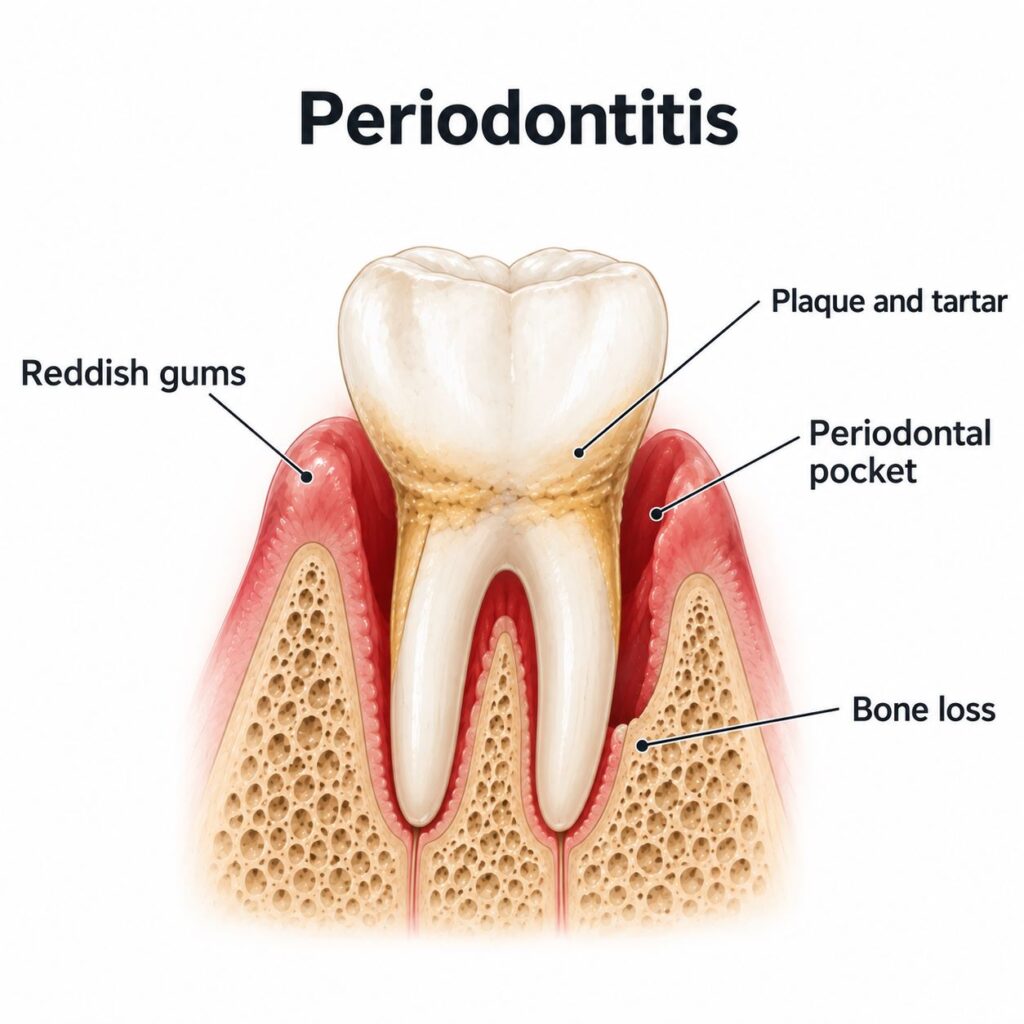
Periodontal disease, also known as gum disease is an inflammatory condition affecting the gums, bone and tissues that support the teeth.
- It can develop as plaque, builds up and hardens into tartar.
- As plaque and tartar continue to accumulate, the gums may separate from the teeth and create deeper pockets where more plaque and bacteria can collect.
- This can lead to inflammation, bleeding and loss of supporting bone.
Gingivitis and Periodontitis
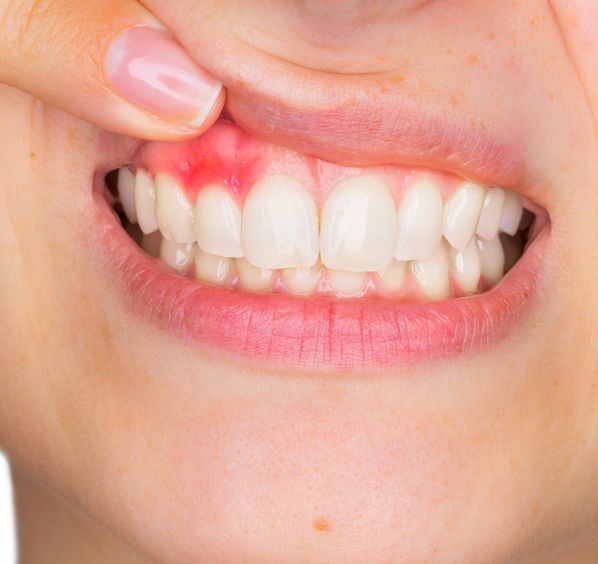
Gingivitis is the early stage of gum disease and is commonly caused by plaque buildup on the teeth.
Symptoms:
- Gums become red, swollen and tender to the touch.
- Bleeding during brushing or flossing.
- Persistent bad breath and increased sensitivity can also occur.
Without appropriate care, gingivitis may progress to periodontitis.
Periodontitis is a more advanced form of gum disease that affects the supporting structures of the teeth. As the condition progresses, deeper pockets can develop between the gums and teeth with inflammation, bleeding and possible bone loss.
Stages of Gum problems
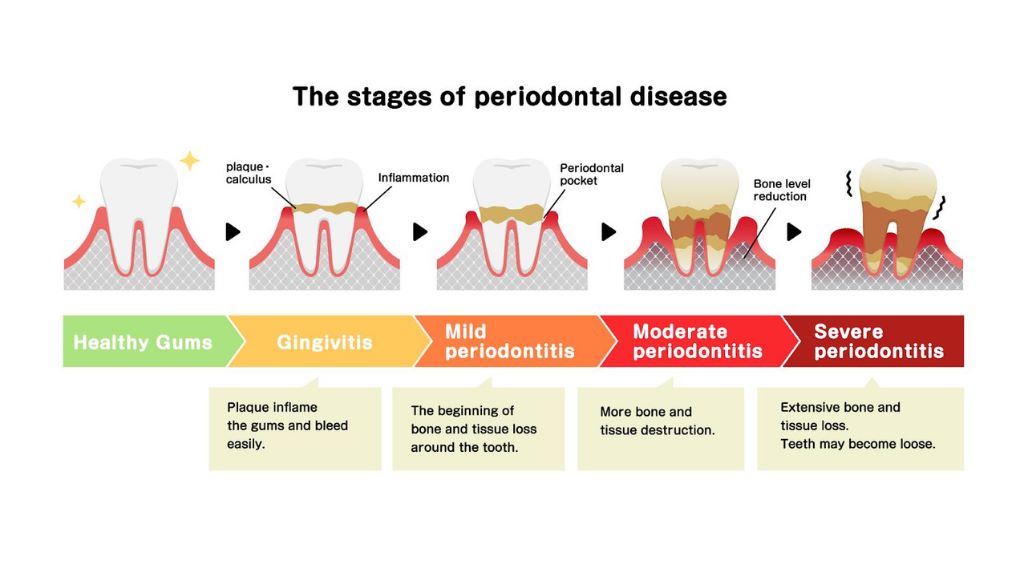
Gum problems progresses through different stages. The severity increases as the infection begins to affect the tissues and bone supporting the teeth.
- Healthy Gums are essential for maintaining good oral health and provide important support to the teeth.
- Gingivitis is the earliest stage of gum disease and is characterised by inflammation of the gums. At this stage, there is usually no loss of bone or tissue. With good oral hygiene and professional dental care, gingivitis can often be reversed.
- Mild Periodontitis is the next stage after gingivitis. The inflammation can extend deeper and begin affecting the supporting structures of the teeth. Pockets may start forming between the gums and teeth, and some bone loss may occur. This stage can still be managed with improved oral hygiene and professional treatment, although damage to the bone and tissues can become irreversible if left untreated.
- Moderate Periodontitis involves increased inflammation and more significant damage to the gum tissue and supporting bone. The pockets around the teeth become deeper, bleeding may increase and the teeth may begin to feel mobile. More substantial bone loss can occur at this stage. Treatment is possible but may require more intensive dental intervention, such as scaling and root planing.
- Severe Periodontitis is an advanced stage of gum disease involving significant damage to the structures supporting the teeth. It can cause severe gum recession, deep pockets, noticeable tooth mobility and potentially tooth loss. At this stage, the damage is often irreversible and surgical treatment may be required to restore gum health and stabilise the teeth.
Treatments for Gum problems
The treatment for gum disease depends on the stage and severity of the condition.
Gingivitis treatment generally focuses on removing plaque and tartar buildup and improving oral hygiene. A professional dental cleaning helps clean the teeth and gum line, while guidance on proper brushing and flossing can help maintain gum health at home.
Mild to Moderate Periodontitis may require scaling and root planing. This removes plaque and tartar from below the gum line and smooths the tooth roots to help the gums reattach. Antibiotics may also be prescribed to help control bacterial infection.
Severe Periodontitis may require surgical treatment to address damage to the gums and supporting structures. Depending on the condition, treatment may include flap surgery, bone grafts or tissue regeneration. Laser therapy may also be used to reduce bacteria and support healing in affected gum areas.
General Gum health management
Along with professional treatment, maintaining good oral hygiene is important for managing gum health.
- Antimicrobial mouthwash may help reduce bacteria and plaque.
- Lifestyle changes such as avoiding tobacco, maintaining a balanced diet and managing conditions such as diabetes can support healthier gums.
- Regular dental cleanings and check-ups are also important for ongoing maintenance.
Laser Gum Surgery
Laser gum surgery is an advanced dental procedure that uses laser technology to treat various gum problems, particularly gum disease.
Benefits of Laser Gum Surgery
- Reduced discomfort during and after the procedure compared with traditional methods.
- Minimal bleeding as the laser can cauterise tissue as it cuts during the surgery.
- Faster recovery and return to normal activities sooner.
- Preservation of healthy tissue by precise treatment of infected or damaged tissue while minimising impact on surrounding healthy areas.
How gum health affects overall health?
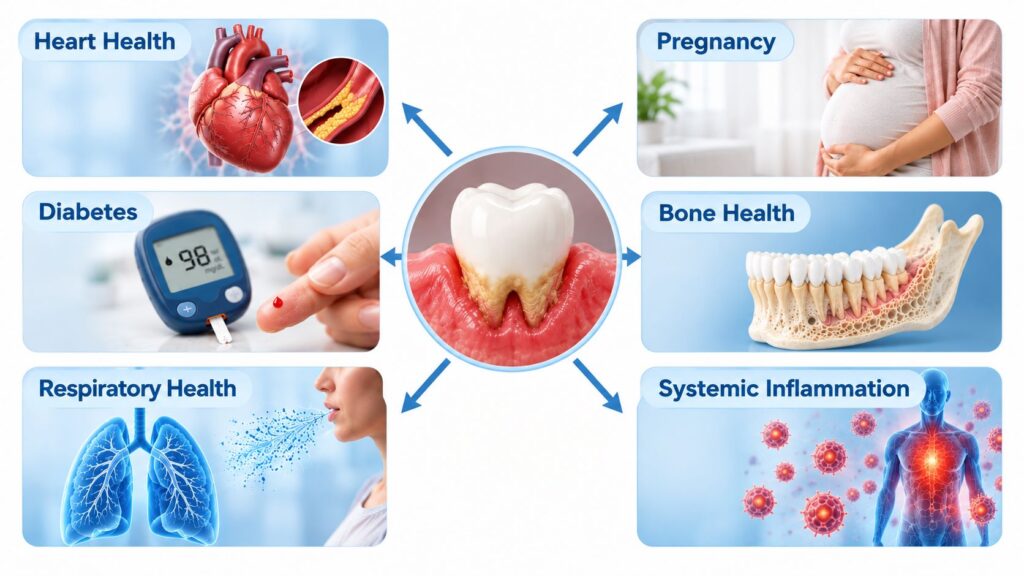
The health of your gums is closely connected with your overall health and well-being. Gum problems may be associated with several health conditions, making proper gum care an important part of maintaining good general health.
- Heart Health can be affected as as inflammation associated with gum problems can contribute to plaque buildup in the arteries.
- Diabetes and gum problems have a two-way relationship. People with diabetes may be more prone to gum infections, while gum disease can make diabetes more difficult to control.
- Respiratory Health may also be at risk as the bacteria from gum infections can be inhaled into the lungs and may contribute to respiratory problems.
- Pregnancy may have an increased risk of complications including preterm birth and low birth weight.
- Bone Health may also get affected as the gum problems can cause bone loss in the jaw, which may affect overall bone health.
- Systemic Inflammation as these gum problems can contribute to chronic inflammation in the body, which may affect various health conditions.
Regular dental check-ups, good oral hygiene, a balanced diet and avoiding tobacco can help support healthy gums and overall well-being.
Precautions after Gum Treatment
After gum treatment, proper aftercare instructions are important for supporting healing and maintaining gum health.
- Choose soft foods over hard/ crunchy foods for the first few days to prevent irritation of the treated area. Yogurt, mashed potatoes and smoothies are suitable options.
- Maintain oral hygiene by continuing to brush gently, avoiding the treated area if it is sensitive. Floss carefully and follow your dentist’s instructions about when to resume flossing.
- Use antimicrobial mouthwash as it helps to reduce bacteria during the healing period.
- Stay hydrated by drinking plenty of water to keep your mouth moist and support the healing process.
- Follow your dentist’s recommendations for managing any pain or discomfort.
- Avoid smoking or using tobacco products for at least a few days, as these can interfere with healing and increase the risk of complications.
- Limit physical activity or exercises for a few days, as increased blood flow and pressure may affect the treated area.
- Contact your dentist if you experience increased swelling, bleeding or persistent pain.
- Attend follow-ups so your dentist can assess healing and treatment progress.
Cost of Gum Treatment
The cost of gum treatment depends on the specific procedure required.
FAQ
Can gum disease develop without causing noticeable symptoms?
Yes. Gum disease can sometimes progress without obvious pain or other noticeable symptoms, especially in its earlier stages. Regular dental examinations can help detect changes before they become more advanced.
Can gum disease be completely cured?
Gingivitis can often be reversed with appropriate care. However, Periodontitis cannot be completely reversed once supporting bone and tissue have been lost, but it can be managed and controlled with appropriate treatment.
Can gum disease cause loose teeth?
Yes. Advanced gum disease can damage the tissues and bone that support the teeth, which may cause teeth to become loose or shift.
Can receding gums grow back on their own?
Gum tissue that has receded does not usually grow back on its own. The dentist has to assess the cause of the recession and determine whether treatment is needed to protect the affected area.
How is gum disease diagnosed?
Our dentist will examine the gums for inflammation, bleeding and recession and may measure the spaces around the teeth. Additional dental examinations or X-rays may be used to assess the supporting bone when necessary.
Can gum disease cause bad breath even if I brush regularly?
Yes. Persistent bad breath can occur with gum disease because bacteria can accumulate around the gums and in deeper areas that are difficult to clean with routine brushing.
Can gum disease return after treatment?
Yes. Treatment can control gum disease, but it can return if plaque builds up again or recommended maintenance is not followed. Good daily oral hygiene and regular dental visits are important for preventing recurrence.
How often should I have my gums checked after gum treatment?
The frequency depends on the severity of your gum condition and how well your gums respond to treatment. Our dentist will recommend a follow-up schedule based on your individual needs.
Can gum disease affect dental implants?
Active gum disease can affect the tissues supporting dental implants and may increase the risk of complications. Therefore, gum health should be assessed and managed before and during implant treatment.
Can gum disease affect my ability to chew?
Yes. As gum disease progresses, damage to the tissues and bone supporting the teeth can cause tooth mobility or discomfort, which may make chewing difficult.
Can smoking make gum disease worse?
Yes. Smoking is an important risk factor for gum disease and can also interfere with healing. Avoiding tobacco can support healthier gums and improve the response to treatment.
Can stress affect my gum health?
Stress may be associated with a higher risk of gum disease and can make it more difficult to maintain healthy oral habits. Managing stress along with good oral hygiene can support overall gum health.
Can gum disease cause tooth sensitivity?
Yes. Gum disease can contribute to sensitivity, particularly when the gums recede and expose areas of the tooth that are normally covered by gum tissue.
Can gum disease cause gums to pull away from the teeth?
Yes. As gum disease progresses, the gums can pull away from the teeth and form deeper spaces or pockets. These areas can allow bacteria to accumulate and contribute to further damage.