
Root Canal Treatment to save the infected teeth
Table of content
What is Root Canal treatment?
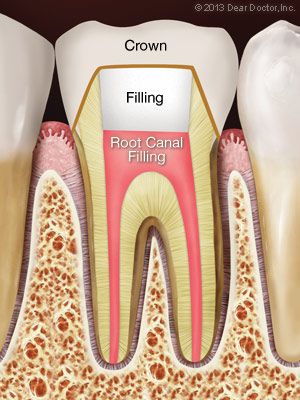
Root Canal Treatment (RCT), also known as endodontic treatment, is a dental procedure performed to treat an infected or damaged tooth while preserving the natural tooth. The pulp inside the tooth becomes inflamed or infected due to deep tooth decay, repeated dental procedures, cracks, chips or injuries that affect the inner portion of the tooth.
Saving the tooth helps to maintain normal biting function and eliminates the need for tooth extraction. Depending on the condition of the tooth, the procedure may be performed by a general dentist or an endodontist.
Benefits of the treatment
- Relieves pain by removing the infected pulp.
- Removes the source of infection and helps prevent it from spreading.
- Reduces the risk of dental abscess by eliminating infected tissue.
- Preserves the natural tooth and reduces the need for extraction.
- Maintains natural biting force and chewing efficiency.
- Protects neighbouring teeth by preventing unnecessary strain.
- Reduces the need for tooth replacement by saving the affected tooth.
Steps involved in the treatment
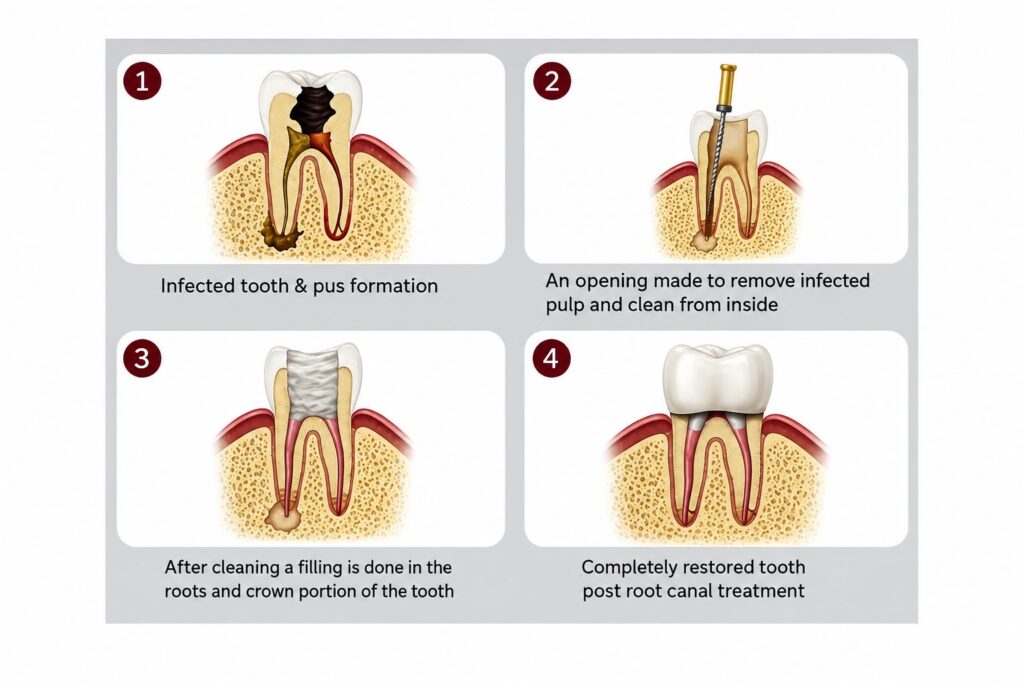
The treatment is performed in a series of carefully planned steps to remove the infection and preserve the natural tooth. The procedure generally includes:
- Examination and diagnosis: The affected tooth is examined and dental X-rays may be taken to assess the extent of the infection.
- Local anaesthesia: The tooth and the surrounding area is numbed to ensure a comfortable procedure.
- Isolation of the tooth: A rubber dam is placed around the tooth to keep the treatment area clean and dry.
- Cleaning the root canals: A small opening is created to remove the infected pulp. The root canals are then cleaned, shaped and disinfected.
- Sealing the canals: The cleaned root canals are filled with a suitable material and sealed to help prevent reinfection.
- Final restoration: The tooth is restored with a filling, and a dental crown may be recommended when additional protection is required.
Painless Root Canal treatment
Painless Root Canal treatment is performed under local anaesthesia to numb the affected tooth and the surrounding area, helping to minimise discomfort during the procedure. Modern techniques and equipment allow the treatment to be carried out with greater precision and patient comfort.
For patients who experience dental anxiety, sedation options may also be recommended when required. After the procedure, medications and post-treatment instructions are provided to support the healing process and ensure a comfortable recovery.
Single Sitting Root Canal treatment
Many root canal treatments can be completed in a single appointment, making the procedure more convenient while reducing the number of dental visits and overall healing time.
However, some cases may require multiple appointments, when the infection is extensive or the tooth has a complex root canal structure. The number of visits depends on the condition of the tooth and the complexity of the treatment.
The procedure generally includes:
- Removal of infected pulp: The infected or inflamed tissue is carefully removed from the tooth.
- Cleaning and disinfection: The root canals are cleaned, shaped and disinfected.
- Filling and sealing: The canals are filled with a suitable material and sealed to help prevent reinfection.
- Final restoration: The tooth is restored with a filling. A dental crown may also be recommended to provide additional strength and protection.
Intentional Root Canal treatment
In certain situations, treatment may be recommended even before symptoms appear. This is known as an intentional root canal treatment.
It is commonly advised when a tooth requires significant trimming for procedures such as a dental bridge or when the tooth has deep decay or multiple fillings. Performing the treatment in advance helps to reduce the risk of future infection and severe sensitivity after the restorative treatment is completed.
Repeat Root Canal treatment
Although root canal treatment is a successful procedure, some teeth may require repeat treatment if the infection persists or recurs. The procedure involves removing the existing filling material, cleaning the root canals again and resealing them to help preserve the natural tooth.
Repeat treatment may be recommended in the following situations:
- Persistent infection: The tooth does not heal completely after the initial treatment.
- Reinfection: Bacteria enter the root canals due to leakage or damage to the restoration.
- Missed canals: Additional root canals that were not treated during the first procedure require further treatment.
- Damaged restoration: A loose or damaged filling or crown allows bacteria to reach the root canals.
Aftercare
The aftercare for this treatment is similar to that of the initial procedure.
- Maintaining good oral hygiene.
- Monitoring the treated tooth
- Attending follow-up appointments help support proper healing.
If you notice persistent pain, swelling or any unusual symptoms after the procedure, consult your dentist for further evaluation.
Precautions after treatment
Proper care after the treatment supports the healing process and helps protect the treated tooth. Following your dentist’s advice and maintaining good oral hygiene play an important role in a successful recovery.
After the procedure, it is recommended to:
- Avoid chewing on the treated tooth until the numbness wears off and the permanent restoration is completed.
- Take prescribed medications as directed by your dentist.
- Maintain good oral hygiene by brushing and flossing regularly.
- Attend follow-up appointments to monitor healing and complete the treatment if required.
- Consult your dentist if you experience persistent pain, swelling or any unusual discomfort.
Cost of Root Canal Treatment
| Root canal | Starting cost (in INR) |
|---|---|
| Treatment cost | ₹4,000 |
The final treatment cost may vary depending on the individual treatment requirements.
FAQ
How do I know if I need a root canal even if I have little or no pain?
A root canal may be needed when the pulp inside a tooth is infected or damaged, even if there is little or no pain. Signs such as prolonged sensitivity, pain while biting, swelling, deep decay or changes around the tooth may indicate a problem. A dental examination is needed to confirm whether root canal treatment is required.
Can a root canal save a badly damaged tooth?
In many cases, root canal treatment can preserve a tooth with significant internal damage or infection, provided enough healthy tooth structure remains to restore it. Our dentist will assess whether the tooth can be saved.
Can I eat immediately after a root canal?
It is best to wait until the numbness has completely worn off before eating to avoid accidentally biting your cheek or tongue. Our dentist may also advise you to avoid chewing on the treated tooth until it has been properly restored.
What happens if the temporary filling placed after a root canal comes out?
Contact our dentist if the temporary filling comes out. The tooth may need to be protected with a new temporary restoration to prevent food and bacteria from entering it before the final restoration is placed.
Is mild pain or sensitivity normal after a root canal?
Some mild soreness or sensitivity can occur for a few days while the surrounding tissues heal. Severe, persistent or worsening pain should be evaluated by the dentist.
How long can a tooth last after a root canal?
A properly treated and restored tooth can last for many years and, with good care, may last a lifetime. Its long-term health also depends on the restoration and maintaining good oral hygiene.
Does every tooth need a crown after a root canal?
Not necessarily. The need for a crown depends on the tooth’s location, how much natural tooth structure remains and the amount of chewing force it needs to withstand.
Can a root canal-treated tooth get infected again?
Yes. Reinfection can occur if bacteria enter the treated tooth or if the previous treatment or restoration develops a problem. If symptoms return, the tooth should be examined by a dentist.
Can I brush and floss normally after a root canal?
Yes. You can generally continue brushing and flossing while being gentle around the treated area. Follow any specific instructions given by the dentist.
Can a root canal be done on a tooth with an abscess?
A tooth with an abscess may sometimes be treated with a root canal if it can be saved. Our dentist will assess the infection and the condition of the tooth before deciding on the appropriate treatment.
What happens if my tooth still hurts months after a root canal?
Persistent or returning pain months after treatment should be evaluated by the dentist. It may be related to reinfection, an untreated canal, the restoration or another problem affecting the tooth.
Can I return to work after a root canal?
Many people can return to their normal routine after a root canal, depending on the treatment and how they feel afterward. Our dentist can advise you if any specific restrictions are needed.
What happens if a tooth cannot be saved with a root canal?
If a tooth has damage that makes it impossible to restore or save, extraction may be considered. Our dentist can discuss suitable options for replacing the missing tooth.